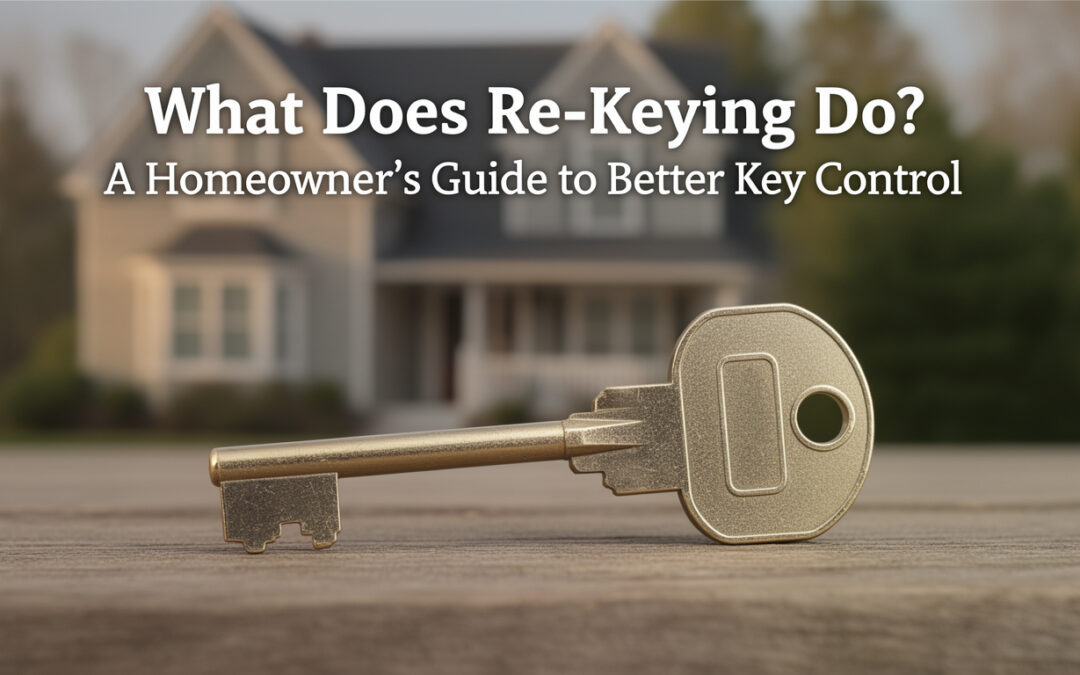
Your house keys represent more than a way to open the front door—they determine who has access to your home. The problem is that once a key has been copied, it can be difficult to know exactly how many versions are still in circulation.
This is particularly important after moving house, changing tenants, losing a key or taking control of a commercial property. You may have been handed two or three keys, but that doesn’t necessarily mean they’re the only copies that exist.
Re-keying can provide a practical solution. Rather than automatically replacing the entire lock, a locksmith may be able to alter its internal keying so the existing keys stop working and a new key operates it instead. A professional Best locksmith Barnet can assess your existing locks and determine whether re-keying or replacement is the more appropriate option.
📑 Table of Contents
📌 What Does Re-Keying Actually Mean?
📌 How Does a Locksmith Re-Key a Lock?
📌 Why Re-Key After Moving Home?
📌 Should New-Build Homeowners Consider Re-Keying?
📌 Re-Keying After Losing a Key
📌 Re-Keying vs Replacing the Complete Lock
📌 Can Every Door Lock Be Re-Keyed?
📌 Better Key Control for Your Household
📌 Final Thoughts
🔐 What Does Re-Keying Actually Mean?
Re-keying changes the internal keying of a suitable lock so that a different key operates it.
The existing lock hardware can often remain in place. Instead of replacing everything, the locksmith works with the cylinder or relevant internal components.
After successful re-keying:
🔑 Old keys no longer operate that lock
⚙️ Internal keying corresponds with a new key
🗝️ New keys are supplied for authorised users
🚪 Suitable existing hardware can remain installed
This makes re-keying particularly useful when the lock itself is in good condition but you’re uncertain who may possess copies of the old key.
⚙️ How Does a Locksmith Re-Key a Lock?
The precise procedure depends on the type and manufacturer of the lock.
With a traditional pin-tumbler cylinder, for example, the cuts along the correct key position internal components at the appropriate height, allowing the cylinder to turn.
When a compatible lock is re-keyed, its internal keying is changed to correspond with a different key.
The principle is straightforward:
🔐 Existing lock
⬇️
🛠️ Internal keying altered
⬇️
❌ Previous key no longer works
⬇️
🔑 New key operates the lock
It sounds simple, but correct identification and servicing of the lock matter. Different manufacturers and locking systems have different requirements.
🏡 Why Re-Key After Moving Home?
Moving into a new property is one of the strongest reasons to review key control.
You might receive every key the previous occupant remembers having, but you cannot necessarily know whether copies were previously supplied to:
👤 Former residents
🧹 Cleaners
🛠️ Builders or contractors
🐕 Pet sitters
🤝 Friends and neighbours
🏢 Managing agents
Re-keying suitable locks effectively draws a line under previous key access. The newly configured lock operates with the new authorised keys rather than the old ones.
That provides something every new homeowner should want: clear control over who can unlock the property.
🏗️ Should New-Build Homeowners Consider Re-Keying?
It’s easy to assume that because a house is brand new, nobody else could possibly have had access to its keys.
Construction projects, however, can involve numerous authorised people before the homeowner receives the property. Depending on the development and locking system, builders may use temporary access arrangements, construction keying or master-key systems during the project.
That does not mean every new-build property needs its locks changed. Instead, homeowners should establish what system was used and what happens to construction access after handover.
Useful questions include:
❓ Was temporary construction keying used?
❓ Was the property part of a master-key arrangement?
❓ Which keys should currently operate each external door?
❓ Is the installed cylinder suitable for the desired security level?
If there’s uncertainty, a locksmith can inspect the final configuration and advise whether any action is necessary.
🎥 Video: How Lock Re-Keying Works
A concise homeowner-friendly demonstration explaining how re-keying changes which key operates a lock, when the service is useful, and the difference between re-keying an existing cylinder and replacing the entire lock.
🗝️ Re-Keying After Losing a Key
A missing house key isn’t automatically a security emergency, but its circumstances matter.
If you’ve simply misplaced a key somewhere inside your home, the risk may be minimal. If it disappeared in public, was stolen, or could potentially be associated with your address, the situation deserves more attention.
You should consider:
🔍 Where was the key probably lost?
🏠 Could anything identify the property it belongs to?
🔑 Are other copies accounted for?
🚪 Which doors does the missing key operate?
⚠️ Is there any reason to suspect theft?
When there’s a realistic possibility of unauthorised access, re-keying a compatible lock can make the missing key obsolete.
🔄 Re-Keying vs Replacing the Complete Lock
These services shouldn’t be treated as interchangeable. The right choice depends on what problem you’re trying to solve.
🔑 Re-Keying May Be Appropriate When:
✅ The existing lock is in good working condition
✅ The lock offers an appropriate level of security
✅ Previous keys need to stop working
✅ The particular cylinder supports re-keying
✅ Key control is the primary concern
🚪 Replacement May Be Better When:
⚠️ The existing lock is damaged
⚠️ Components are significantly worn
⚠️ The lock regularly sticks or fails
⚠️ The existing security specification is inadequate
⚠️ You want to upgrade the locking system
⚠️ Re-keying isn’t practical for that particular product
A reputable Best locksmith Barnet should assess what’s already fitted before recommending unnecessary replacement hardware.
🛠️ Can Every Door Lock Be Re-Keyed?
No.
“Re-keying” is a broad term, and not every lock found in UK homes is designed to be reconfigured in the same way.
Whether re-keying is possible or worthwhile can depend on:
🔧 Lock type
⚙️ Cylinder design
🏷️ Manufacturer
🔑 Existing key system
🛠️ Condition and age
🛡️ Required security standard
Sometimes replacement is quicker, more economical or provides a worthwhile security upgrade. That’s why the lock itself needs to be assessed rather than assuming re-keying is always the answer.
👨👩👧 Better Key Control for Your Household
Changing the lock configuration is only half the job. Good security also means controlling the new keys properly.
Once your locks have been re-keyed:
🔑 Keep track of how many keys exist
👤 Record who receives each copy where appropriate
🚫 Avoid leaving spare keys in predictable outdoor locations
🤝 Give emergency copies only to people you trust
🔐 Consider an appropriate secure key safe where controlled external access is genuinely required
📋 Review access when occupants, tenants or authorised personnel change
The fewer unknown keys in circulation, the easier it is to maintain meaningful control over your property.
📊 Re-Keying vs Lock Replacement
Which Option Addresses Different Security Needs?
The chart is an illustrative decision guide rather than a technical performance rating. Individual locks should be assessed before deciding between re-keying and replacement.
📉 Better Key Control Starts With Knowing Who Has Access
🏠 TAKE CONTROL OF A PROPERTY
⬇️
🔍 CHECK EXISTING LOCKS
⬇️
❓ CONSIDER WHO MAY HOLD OLD KEYS
⬇️
🔑 RE-KEY SUITABLE LOCKS
OR
🚪 REPLACE WHERE APPROPRIATE
⬇️
🗝️ ISSUE NEW KEYS CAREFULLY
⬇️
🛡️ CONTROL WHO CAN ACCESS YOUR PROPERTY
✅ Final Thoughts
Re-keying has a straightforward purpose: changing which key operates a suitable existing lock.
For homeowners, landlords and businesses, that can be particularly valuable after moving premises, losing a key, changing occupants or discovering that too many unknown copies may be in circulation.
It can also be a cost-effective alternative to replacing serviceable hardware. However, re-keying shouldn’t be used to preserve an old, damaged or inadequate lock simply because it’s still functioning. Where the existing security needs improvement, replacement may provide better long-term value.
If you’re uncertain who might have keys to your property, Unique Locksmiths can inspect your existing locks and explain the available options. An experienced Best locksmith Barnet can determine whether re-keying, replacement or a security upgrade is appropriate, helping you regain control of your keys and confidence in your home’s security.