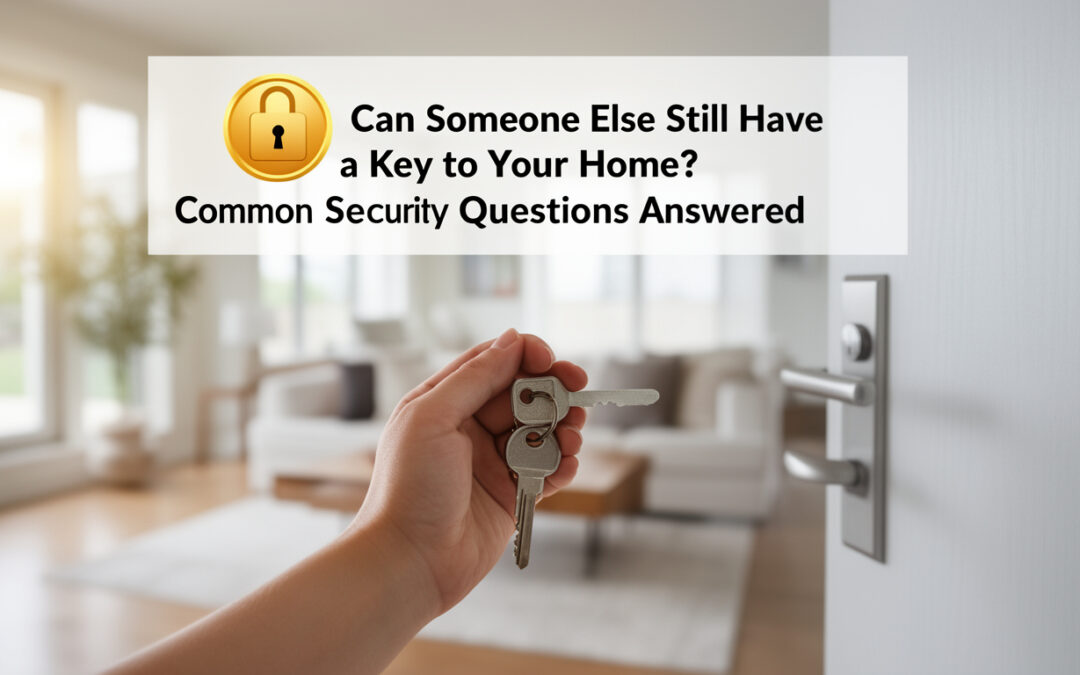
When you lock your front door, you expect that you’re controlling who can enter your home. But there’s an important question many homeowners overlook: do you actually know how many keys to your property exist, and who might still have one?
Over the years, keys can be copied, lent to friends, handed to contractors or forgotten about entirely. Moving into a new property introduces another uncertainty because you may have no reliable way of knowing how many keys were issued before you arrived.
This doesn’t mean somebody is necessarily planning to use an old key. However, uncertainty about who can access your home is a legitimate security concern, and one that can often be addressed without unnecessary expense.
Whether you’ve recently moved, misplaced a key or simply want greater peace of mind, understanding your options is the first step. An experienced Emergency locksmith Enfield can assess your existing locks and explain whether re-keying, cylinder replacement or another security improvement would be appropriate.
📑 Table of Contents
🔑 Can Someone Still Have a Copy of My House Key?
🏠 Should I Change the Locks When Moving Home?
🗝️ What If a Previous Tenant Still Has a Key?
🔐 Can a Lock Be Re-Keyed Instead of Replaced?
🚨 What Should I Do If I’ve Lost My Keys?
👷 Should I Change Locks After Contractors Have Had Access?
🛡️ Are Restricted Keys More Secure?
🚪 Do I Need to Replace Every Lock in My Home?
📊 Which Key Security Situations Need Attention?
🔍 How Can I Improve Key Control?
❓ Frequently Asked Questions
✅ Final Thoughts
🔑 Can Someone Still Have a Copy of My House Key?
Yes. Unless you’ve maintained complete control over every key and every authorised duplicate, it’s possible that copies exist outside your household.
Think about how many people may have received keys over the years.
👨👩👧 Family members — Relatives may have been given spare keys for emergencies.
🤝 Friends and neighbours — Someone may have held a key while you were away.
🧹 Cleaners and household staff — Regular visitors sometimes need independent access.
🐕 Pet sitters — Keys may have been shared during holidays or working hours.
👷 Contractors — Tradespeople may have been provided temporary access.
🏠 Former occupants — Previous owners or tenants may have retained keys.
In most situations, these arrangements are entirely innocent. The issue is that keys are physical objects that can be copied, misplaced or forgotten.
If you cannot account for who has access, it may be time to review your key security.
🏠 Should I Change the Locks When Moving Home?
Changing or re-keying suitable locks after moving is a sensible security precaution.
Even if the previous owner or tenant hands over several keys, you cannot necessarily confirm that every duplicate has been returned.
For example, keys may previously have been given to relatives, neighbours, estate agents or contractors. Some copies might have been made years before the property changed hands.
🔍 What should you check?
🚪 Front door — Identify the type and condition of the main entrance lock.
🏡 Rear door — Check that its keys are accounted for.
🪟 Patio doors — Review accessible external locking arrangements.
🚗 Garage — Determine whether it has a separate key.
🌳 Side gates and outbuildings — Consider any additional access points.
🔐 Existing cylinders — Check whether they are suitable for the door and current security requirements.
You don’t necessarily need to replace every complete locking mechanism. In many cases, changing an appropriate cylinder or re-keying a compatible lock can establish a new set of working keys.
The correct approach depends on the hardware already installed.
🗝️ What If a Previous Tenant Still Has a Key?
This is a common concern in rented accommodation.
A former tenant may have forgotten to return a key, or an old duplicate may still exist.
However, tenants should not automatically replace locks without considering their tenancy agreement and the property owner’s responsibilities.
A practical approach is to:
📋 Review your tenancy agreement.
🏠 Contact the landlord or managing agent.
🔑 Ask whether the locks were changed or re-keyed before you moved in.
🛡️ Raise any specific concerns about unauthorised access.
🔧 Agree on appropriate security improvements where necessary.
Landlords and managing agents should also consider key control when occupants change, particularly where the history of previous keys cannot be established.
The aim is to ensure that current occupants have appropriate security without creating avoidable access or tenancy disputes.
🔐 Can a Lock Be Re-Keyed Instead of Replaced?
Sometimes, yes.
Re-keying changes the internal keying arrangement of a compatible lock so that a different key operates it. Once the work has been completed correctly, the previous key should no longer operate that lock.
However, not every lock can be re-keyed economically or appropriately.
🔑 Re-keying may be suitable when:
✅ The existing lock is in good condition.
✅ The lock design supports re-keying.
✅ The main concern is control over existing keys.
✅ There is no separate mechanical or security problem requiring replacement.
🔧 Replacement may be preferable when:
⚠️ The lock is worn or damaged.
⚠️ The existing cylinder provides inadequate security.
⚠️ Re-keying is not supported or economical.
⚠️ A security upgrade is desirable.
⚠️ The mechanism has developed reliability problems.
A professional locksmith can explain which approach makes sense for your particular door.
🎥 Video: Re-Keying vs Replacing a Door Lock
A short homeowner-friendly video explaining the difference between changing a lock’s working key and replacing a cylinder or complete locking mechanism. Use clear illustrations of residential door hardware without demonstrating lock bypass techniques.
🚨 What Should I Do If I’ve Lost My Keys?
Losing your keys doesn’t automatically mean somebody can identify your address or access your home.
The circumstances matter.
For example, a single unmarked key lost somewhere far from home presents a different concern from a set of house keys lost alongside documents showing your address.
Consider the following questions:
🔍 Where were the keys lost?
🏠 Could they be connected to your property?
🔑 Was a complete set lost?
👀 Is there any indication they were stolen?
🚪 Do the missing keys provide access to more than one entrance?
If there is a credible possibility that somebody could identify and access your property, arranging a lock change or suitable re-keying is a prudent response.
If you are currently unable to secure the property, the situation becomes more urgent.
An Emergency locksmith Enfield can assess the affected locks and help restore control over access.
If you believe keys were stolen, report the theft to the police where appropriate and retain any relevant reference details.
👷 Should I Change Locks After Contractors Have Had Access?
Not necessarily.
Many homeowners provide temporary access to trusted tradespeople during renovations, repairs or maintenance.
In most cases, that access is legitimate and causes no problem.
Nevertheless, consider how keys were managed.
🔑 Was a physical key handed over?
📋 Was it recorded who received it?
🤝 Has the key been returned?
🏠 Was access supervised?
🔐 Could additional copies have been made?
A contractor having access doesn’t automatically indicate a security risk or wrongdoing.
However, where several parties have held keys during an extended renovation, the property owner may reasonably choose to establish a new set of keys once the work is complete.
That is particularly relevant when the key history is unclear.
🛡️ Are Restricted Keys More Secure?
Restricted key systems are designed to provide greater control over key duplication.
Depending on the system, additional keys may require specific authorisation and may only be available through approved suppliers.
This can make it easier to manage who is entitled to obtain copies.
However, there are important distinctions.
Restricted key control is not the same thing as resistance to physical attack.
A key system might offer duplication controls without necessarily providing every security feature appropriate for a particular door.
When reviewing cylinders, consider:
🔐 Resistance to relevant forms of attack
🔑 Key duplication controls
📋 Applicable standards and certification
🚪 Compatibility with the door and fittings
🏠 Insurance requirements, where applicable
For some euro-profile cylinders, certification such as TS 007 may be relevant. The correct specification depends on the complete door arrangement and the level of protection required.
A locksmith can help distinguish key control features from the cylinder’s physical security characteristics.
🚪 Do I Need to Replace Every Lock in My Home?
Not always.
The answer depends on which keys may be compromised and which doors those keys operate.
If one lost key operates only a particular entrance, attention may be limited to that lock.
If the same key operates several doors, the situation requires a broader review.
🏡 Consider these scenarios
Scenario 1: One missing back-door key
The back-door lock may be the primary concern, assuming that key operates no other entrances.
Scenario 2: A complete household key set is stolen
Every lock operated by those keys may require attention.
Scenario 3: Moving into a new property
Review all external access points, including garages and outbuildings.
Scenario 4: A former keyholder no longer requires access
Identify exactly which locks their key operates and decide whether the access should be revoked.
This targeted approach can avoid unnecessary work while addressing the genuine concern.
🔍 How Can I Improve Key Control?
Key control means knowing who can access your property and making deliberate decisions about who receives a working key.
You don’t need an elaborate security system to improve it.
🔑 1. Keep a Record of Spare Keys
Know how many keys are in circulation and who holds them.
🤝 2. Limit Unnecessary Distribution
Only provide keys to people who genuinely require access.
🏠 3. Review Access When Circumstances Change
Moving home, changing household arrangements or completing renovation work can all justify a key review.
🚫 4. Avoid Predictable Hiding Places
Doormats, plant pots and obvious garden ornaments are poor substitutes for secure key storage.
🔐 5. Consider Appropriate Key-Control Features
Where duplication control matters, ask about suitable restricted key systems and their limitations.
🔧 6. Deal With Uncertainty
If you cannot establish who has access, a suitable lock change or re-keying may provide a clearer starting point.
📉 The Home Key-Control Process
🏠 YOUR HOME
🔑 IDENTIFY ALL WORKING KEYS
👥 REVIEW WHO HAS ACCESS
🔍 CHECK FOR MISSING OR UNKNOWN COPIES
🔐 RE-KEY OR REPLACE WHERE APPROPRIATE
🛡️ RE-ESTABLISH CONTROLLED ACCESS
❓ Frequently Asked Questions About House Keys and Security
Can someone copy my house key without permission?
Some conventional keys can be duplicated without special authorisation. Restricted key systems may impose additional controls, depending on their design and supplier arrangements.
If unauthorised duplication is a serious concern, ask a locksmith about the options available.
Will changing the cylinder stop old keys from working?
Yes, provided the old cylinder is replaced correctly with one operated by a different key. The previous cylinder’s keys will no longer operate the replacement.
Other locks that still use the old keys will be unaffected.
Does re-keying make a lock more secure?
Re-keying changes which key operates a compatible lock. It can improve access control, but it doesn’t automatically upgrade the lock’s physical resistance to attack.
Should I change my locks after a relationship breakdown?
Where somebody who previously had authorised access should no longer enter the property, reviewing key control may be appropriate. However, property rights, tenancy arrangements and legal restrictions must be respected.
If there are concerns involving threats, harassment or domestic abuse, seek appropriate specialist support and contact the police where necessary.
Can I have one key for several doors?
Some compatible locking systems can be keyed alike, allowing one key to operate multiple locks.
This can be convenient, but losing that key may affect several entrances simultaneously.
What if I suspect someone has entered using an old key?
Prioritise your safety. If you believe an unauthorised person may still be inside, don’t enter or confront them. Contact the police.
If the immediate danger has passed, document your concerns and arrange an appropriate security assessment.
🛠️ When Should You Contact a Locksmith?
Not every spare-key concern requires emergency assistance.
If you’re planning a move or simply want to review your existing security, a scheduled assessment may be sufficient.
More urgent assistance may be appropriate when:
🚨 Your keys have been stolen and can be connected to your address.
🔐 You cannot reliably secure an external door.
🔑 A key has broken inside the lock.
🚪 A lock has been damaged or interfered with.
🏠 There is a credible concern that someone has unauthorised access.
An Emergency locksmith Enfield can inspect the affected hardware, explain the available options and help restore secure access where appropriate.
Before authorising work, ask for a clear explanation of the proposed solution and the likely costs, including any applicable call-out or out-of-hours charges.
🏡 Why Key Control Matters Even When Your Locks Work Perfectly
A lock can operate smoothly, be correctly installed and provide suitable physical security, yet still leave you uncertain about access if unknown working keys exist.
That is why key control deserves its own place in a home security review.
Think of the distinction:
🔐 Lock condition — Does the mechanism work properly?
🛡️ Physical security — Does the hardware provide appropriate protection?
🔑 Key control — Do you know who can operate it?
🚪 Access management — Can you remove access when circumstances change?
Good home security considers all four.
✅ Final Thoughts
It’s easy to assume that having your own house keys means you have complete control over access to your property. In reality, the important question is whether anyone else possesses a working key that you haven’t accounted for.
Previous occupants, trusted neighbours, contractors and forgotten spare keys can all contribute to uncertainty. That doesn’t mean anybody has acted improperly, but it does mean a review may be worthwhile.
If you’ve recently moved, lost a set of keys or discovered that old copies may still exist, start by identifying which locks are affected. Re-keying may be appropriate for some systems, while replacing a cylinder or upgrading outdated hardware may be the better option in others.
Unique Locksmiths can help homeowners assess existing locks, understand their key-control options and choose suitable solutions without automatically replacing more hardware than necessary.
If you need an Emergency locksmith Enfield because your keys have been stolen, a lock is damaged or your property cannot be secured, seek professional assistance promptly.
Your home security isn’t just about how strong your locks are. It’s also about knowing who can open them.